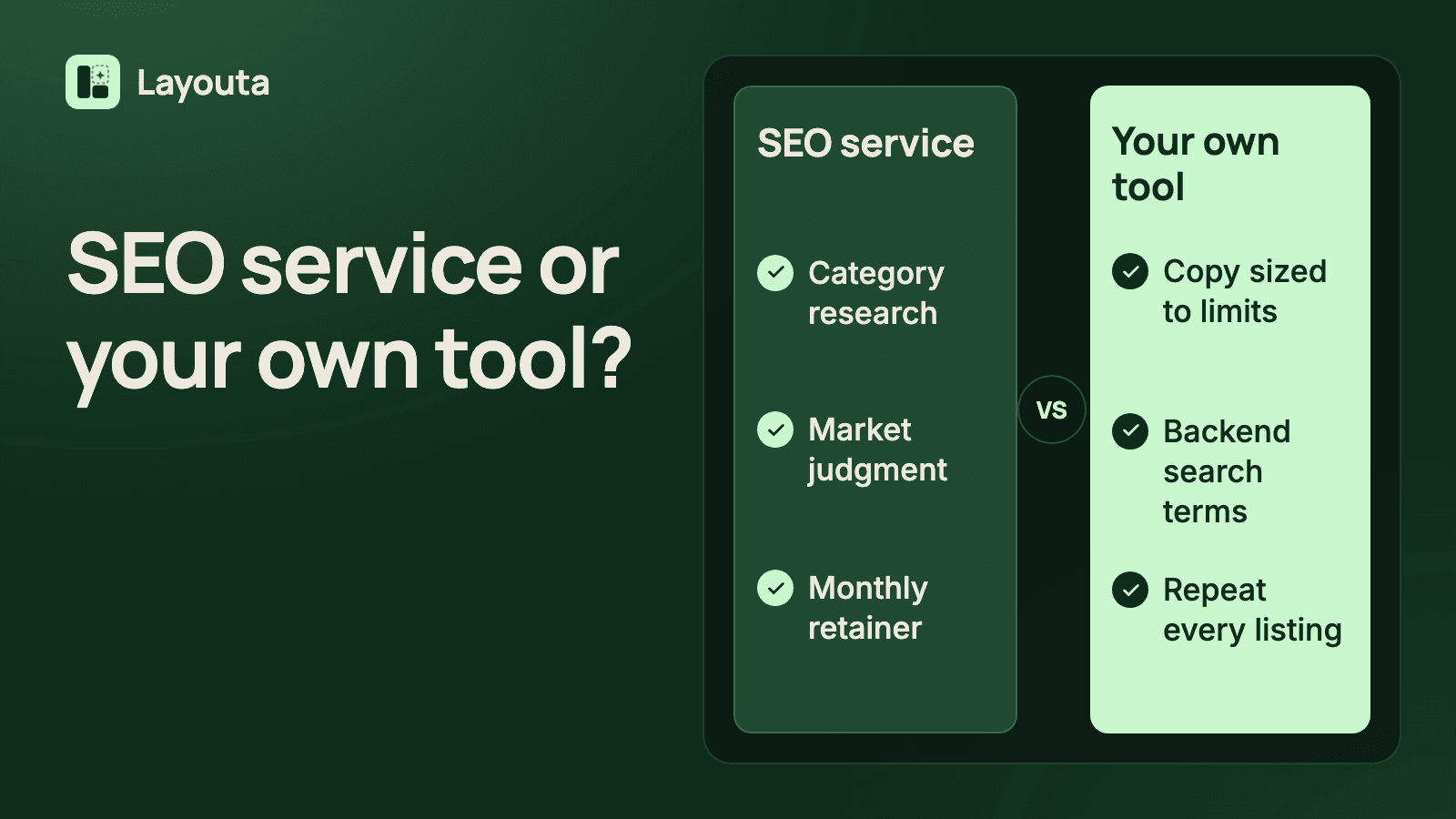
Amazon SEO Services vs. a Tool You Run Yourself: What Actually Moves a Listing
What Amazon SEO services actually do for a listing, what a self-serve tool can and can't replace, and how backend search terms and copy actually get you found.
Search "amazon seo services" and you'll find agencies offering keyword research, backend search term audits, and listing rewrites for a monthly fee. They're not selling something imaginary — a listing with wasted backend bytes and a title that buries its strongest point genuinely ranks and converts worse. The question worth asking isn't whether that work matters. It's which parts of it actually require a person on retainer, and which parts are a repeatable process a tool can run for you every time you touch a listing.
What Amazon SEO actually is, mechanically
There's no separate "SEO mode" on Amazon the way there is on a website. What agencies selling Amazon SEO services actually do is a specific set of mechanical steps: research what shoppers search for in your category, make sure your title and bullets use that language without wasting space, and fill backend search terms with words that aren't already visible in your copy — because a term that's already in your title doesn't need to also be in the backend field; that's bytes a real search term could have used instead. None of this is a black box. It's copywriting against known limits, applied consistently.
Where an agency earns its fee
Category research — genuinely understanding how shoppers in your specific niche search and what they compare before buying — is real work, and it's the part most tools can't do for you because it requires judgment about your market, not just your product. If you're entering a category you don't know well, that research has real value, whether you pay someone for it or do it yourself by studying what's already ranking.
Where a self-serve tool replaces the retainer
Once you know your category and have real references to draw from, the rest of what Amazon SEO services typically deliver — a title and bullets sized to your marketplace's exact limits, backend search terms that don't duplicate your visible copy, and a repeatable process you run every time you update a listing — is exactly the part that benefits from being mechanical rather than manual. A person re-counting bytes by hand introduces the same kind of error a tool doesn't make twice. And a monthly retainer for a process that doesn't change month to month is money spent on repetition, not expertise.
What Layouta actually does here
This isn't an Amazon SEO service, and it doesn't pretend to be — there's no account manager and no promise of a specific ranking, because no honest tool or agency can promise Amazon's algorithm will do anything specific. What it does do: read your marketplace's real character and byte limits from configuration (not a number someone guessed once), draft a title and five bullets sized to fit that limit exactly, and generate backend search terms with an eye on what's already visible in your copy so nothing gets wasted repeating itself. You still choose what to reference and what your product's real strengths are — the tool's job is making sure the mechanical part of the work is done right, every time, without a retainer.
A reasonable way to decide
If you're moving into a category you genuinely don't understand yet, that research is worth paying for, from an agency or from your own time studying the market. If you already know your category and just need every listing sized correctly, with backend terms that aren't wasted, and copy you can edit yourself without waiting on a revision cycle — that's the mechanical half, and it doesn't need a subscription to a service to get done right.
Start a listing and see what the mechanical half looks like when it's built into the tool instead of billed by the hour.
More Posts
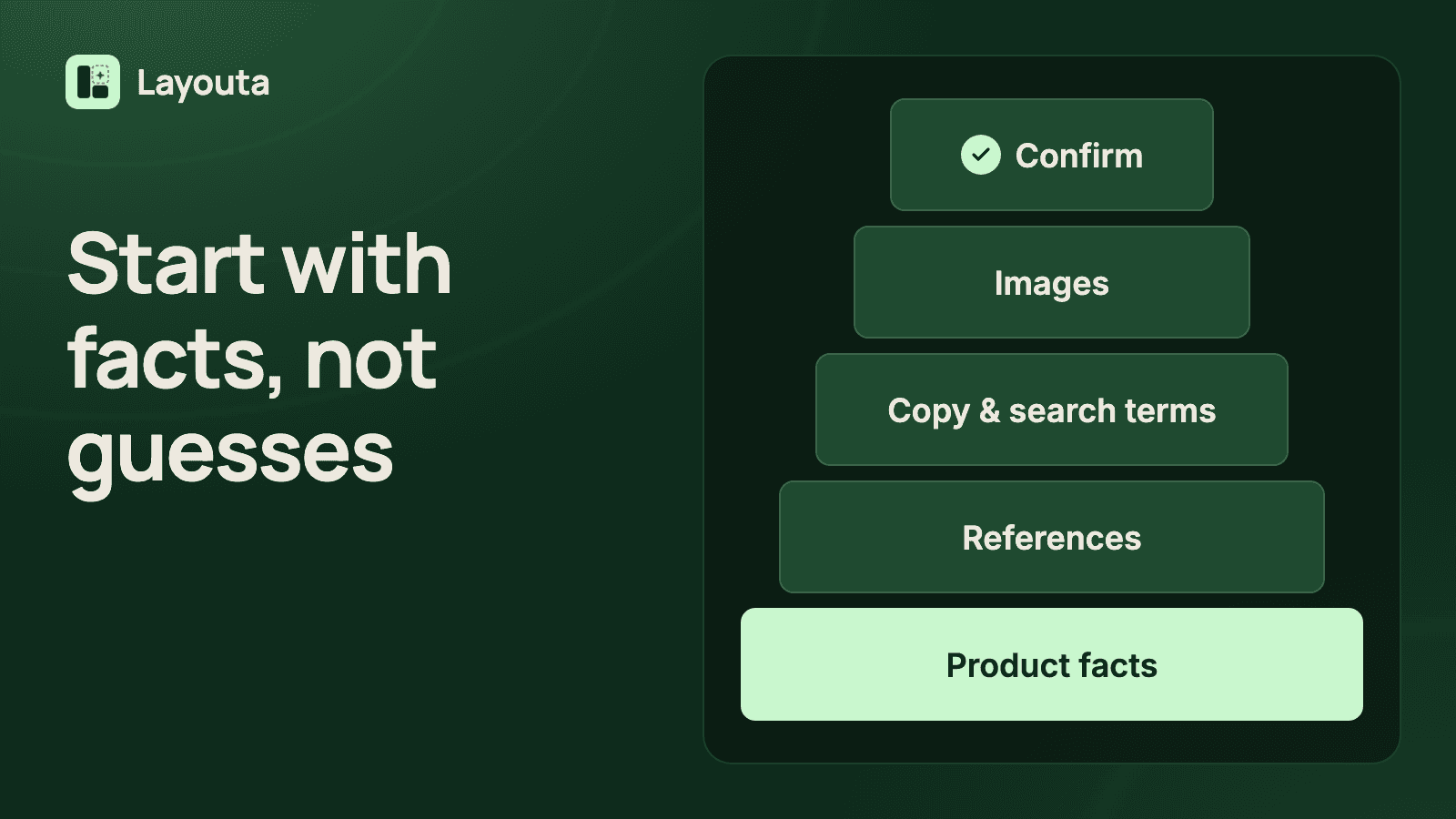
A Practical Framework for Amazon Listing Optimization That Doesn't Start With Guesswork
Real Amazon listing optimization starts with facts and competitive context, not keyword tricks. A step-by-step framework covering copy, backend terms, and images.

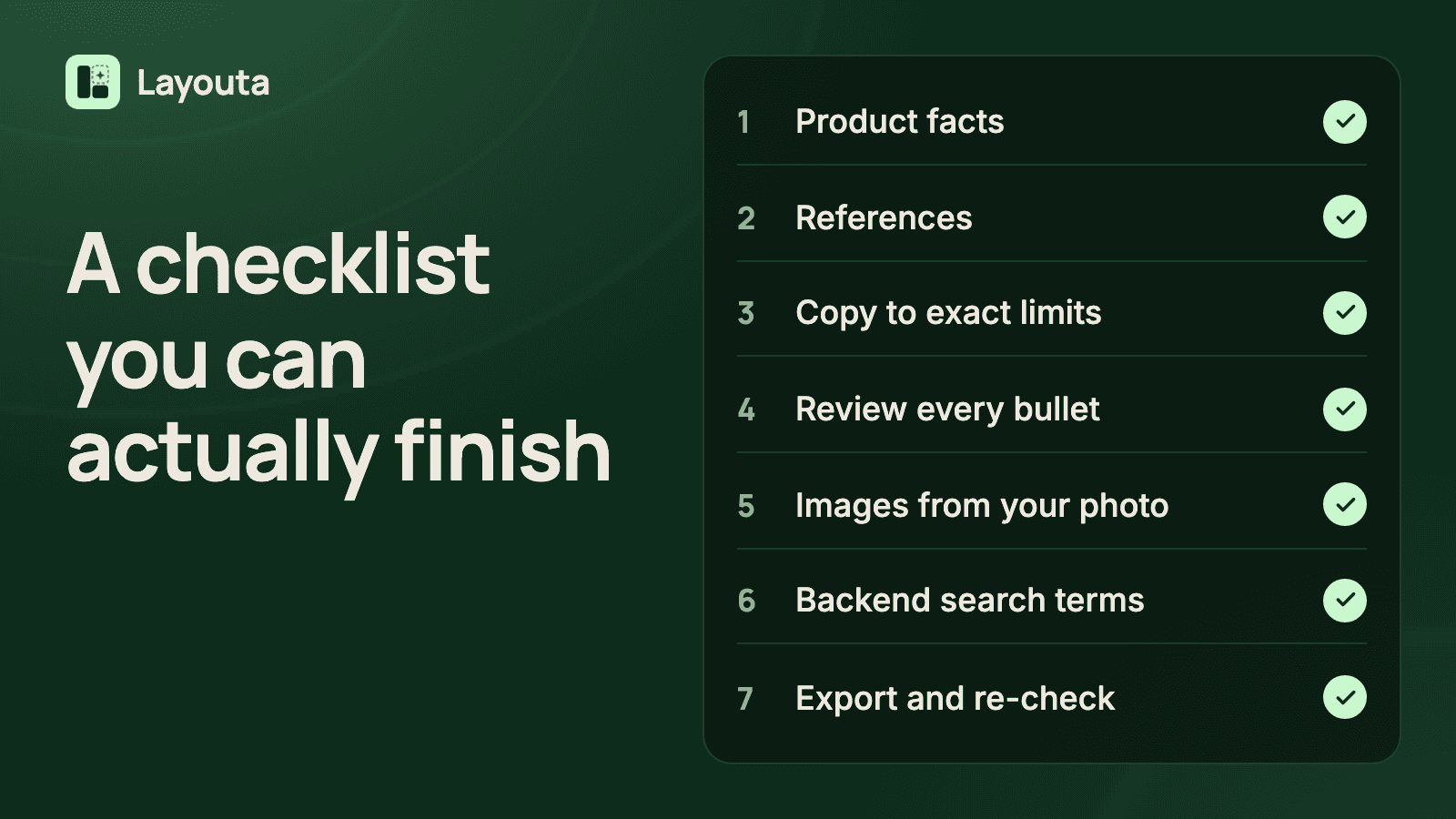
A Product Listing Optimization Checklist Sellers Actually Finish
A practical, in-order checklist for product listing optimization — facts, references, copy, images, and export — built around what you can actually confirm about your product.
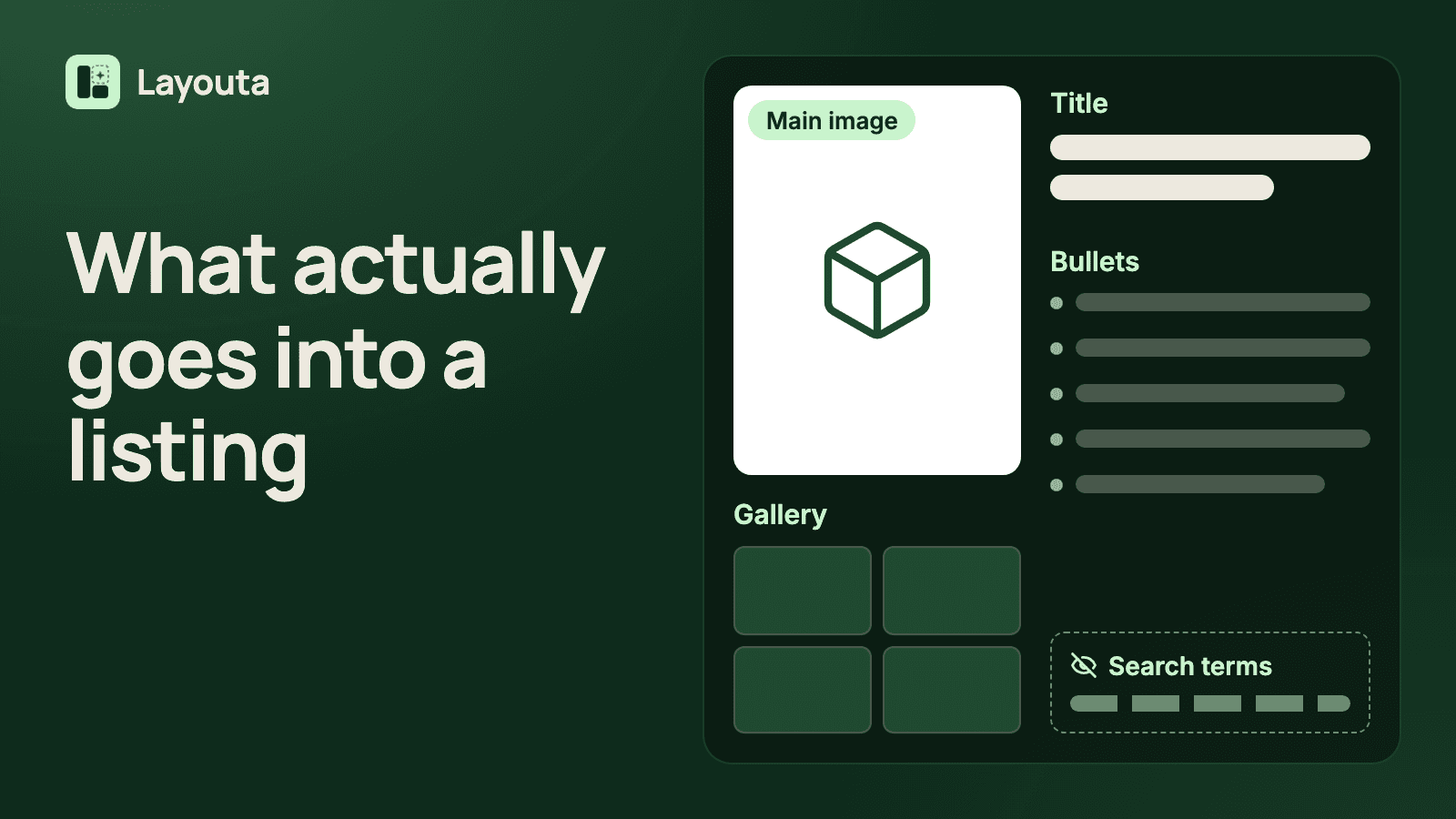
What Actually Goes Into an Amazon Product Listing (And Where Sellers Lose Points)
A structural breakdown of every part of an Amazon product listing — title, bullets, backend search terms, main image, and gallery — and the specific way each one commonly loses a sale.